Ingredient Sources:
Fresh pet foods often rely on high-quality, responsibly sourced ingredients that are closer to their natural state, which can result in a more nutritious and appealing meal for pets. When food animals are raised in humane conditions, with access to open pastures and a natural diet, the resulting meat is richer in essential nutrients and free from harmful additives or hormones. Similarly, when fruits and vegetables are grown in clean environments with minimal chemicals, it provides a better nutrient source to pet food.
Many companies specializing in fresh pet food pay more attention to how ingredients are grown or raised. The conditions in which the animals lived, their diets, slaughtering methods, and the quality controls employed during the processing and transportation of the meat to the manufacturing facility affect nutrients found in the food. This careful approach helps ensure that the meat used in fresh pet food is safe and nutritious – delicious too. Manufacturer members of Next Gen PFMA use meats which have been inspected and passed for human consumption.

A Guide to Ingredients
The ingredients found in most fresh pet foods are ones you recognize from your own food labels. While labeling guidelines limit the use of certain descriptors, the ingredient names for fresh pet food generally align with your expectations of those ingredients. For example, if the label says “chicken” it refers to recognizable parts like breast, thigh, and in some cases, ground bones. It should not contain processed chicken meals or rendered leftovers or scrap parts from animals deemed unsuitable for human consumption [see “Animal to Kibble”]. Similarly, when you see “carrot” listed, you think it refers to the whole, cleaned carrot, not just the leftover peel or stems or other parts typically discarded during human food processing.
The ingredient list for fresh pet foods is much shorter than those for kibble or other highly processed pet foods. This is because fresh meat and other fresh whole foods are naturally rich in nutrients which eliminates the need to be supplemented. Kibble and highly processed foods must add a long list of synthetic vitamins and minerals because they are missing from the ingredients after heavy processing. Fresh food typically does not have preservatives. This is why most fresh pet foods must be stored frozen to prevent spoilage.
Fresh ingredients are naturally high in moisture which is easier on the pets’ digestive tract. Cats in particular should get at least 70% of their daily moisture from their food –fresh food naturally contains 70% moisture. This high moisture content helps prevent dehydration, supports kidney function, and encourages healthy urination, which is crucial for pets prone to urinary issues. Furthermore, the fresh ingredients used in these recipes retain their natural flavors and textures, making the food more palatable and enjoyable for pets. This not only enhances their eating experience but also encourages better overall intake and satisfaction with their meals.
Fresh Food Processing:
The USDA regulates the processing of animals for human food to ensure that rigid quality standards are met. When the USDA approves animals and meat products for human use, the meat is inspected, tested, and certified or graded for human consumption. While the FDA is responsible for pet food manufacturing, fresh food companies using ingredients that have also been inspected and approved for human consumption offer an added measure of quality since they have also been inspected and approved by USDA at the more stringent human food standards.
There are two primary types of processing for what we call “fresh food”:
- Raw: No ingredients are subjected to heat, leaving ingredients and nutrients in their natural state.
- Gently Cooked: Meats are heated to minimum recommended temperatures preserve the nutrients.
Regardless of processing method, most fresh pet foods are stored frozen to prevent spoilage. This makes fresh pet food less convenient than shelf-stable kibble, but the preservatives used in kibble are not healthy for either you or your pet. Using bologna as an example, no one disputes that bologna is highly processed and preserved. But even bologna spoils if it remains in your refrigerator too long spoils.
Final Thoughts:
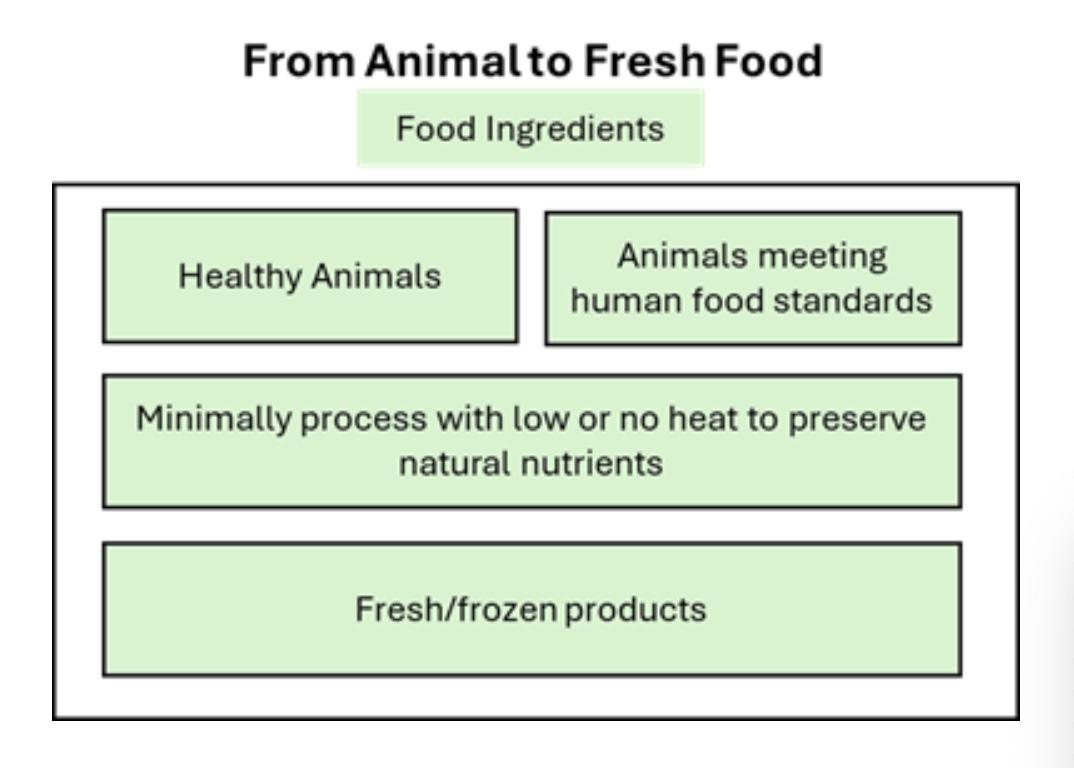
Fresh pet food starts at the farm or ranch, where ingredients are raised and grown, and make their way to the pet food plant as ingredients you recognize. Ingredients that are also sold as human food have been inspected to human food standards prior to arriving at the pet food plant. Ingredients are minimally processed to preserve natural nutrients. Virtually all fresh food products contain “limited ingredients” since they do not need to be as heavily supplemented as do highly processed pet foods. Finally, they are stored frozen which eliminates the need to add preservatives.
 What Makes Pet Food “Complete”?