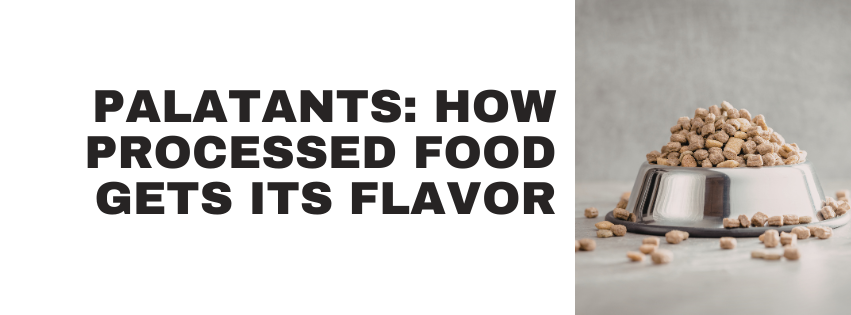
Pet owners often wonder why some dogs and cats are irresistibly drawn to certain kibbles or treats, even when the product itself bears little resemblance to real meat. The answer lies in palatants — specialized flavoring agents that make processed pet foods more appealing.
What Are Palatants?
Palatants are compounds added to pet foods to enhance taste and aroma. They are typically listed on ingredient panels as “flavors.” In most highly processed pet foods, natural aromas and flavors are destroyed during high-heat manufacturing. To compensate, manufacturers add palatants to create an appealing scent and taste that entice pets to eat the product.
Preservatives, which extend shelf life, often impart a bitter aftertaste. Palatants are used to mask this bitterness and simulate the familiar, savory characteristics of real meat. By contrast, foods made from fresh or minimally processed ingredients rarely require palatants—because real meat inherently provides the flavors pets love.
Types of Palatants
There are two primary categories: natural and synthetic palatants. While the distinction appears straightforward, the ingredient sourcing and safety of both categories warrant closer attention.
Natural palatants originate from biological or naturally derived materials. Common examples include:
- Animal digest, produced by chemically or enzymatically breaking down animal tissue. Sources can vary widely and are not necessarily fresh or species-specific.
- Maillard reaction palatants are created by heating amino acids and sugars to mimic cooked meat aromas. These are often sprayed onto kibble or treats to impart “meat,” “liver,” or “roasted” flavors.
- Yeast extracts often supply savory or cheesy flavors that are appealing to pets.
- Organic acids and phosphates add a tartness that cats particularly enjoy. One such additive, sodium acid pyrophosphate (SAPP), is sometimes referred to as “cat crack”.
- Fats and oils from animal or fish sources are sprayed on kibble to replace flavors and aromas lost during processing.
Synthetic palatants, by contrast, are chemically manufactured to imitate natural flavors and aromas. These substances are especially prevalent in lower-cost pet foods. Several synthetic flavor compounds have been restricted or banned in the European Union because of associations with kidney disease, allergic reactions, and carcinogenic potential, yet they continue to be used in the United States.
The “Natural Flavor” Misconception
The term natural flavor can be misleading. Many pet owners equate “natural” with “safe,” but even naturally derived substances may pose health concerns. For example, phosphate-based palatants such as SAPP have been linked to kidney calcification and inflammation when consumed in excess. Because these additives are highly bioavailable, they can cause sharp increases in blood phosphate levels, particularly risky for pets with existing renal conditions.
Why Pet Owners Should Be Concerned
Palatants influence far more than flavor. Their use can have implications for a pet’s health and feeding behavior:
- They may trigger allergies or intolerances.
- Certain compounds have been associated with neurological, endocrine, and gastrointestinal disruptions.
- Some synthetic palatants have been classified as potential carcinogens.
- Highly palatable additives may promote overeating in the same way that artificial flavors encourage snacking in people.
Are Palatants Necessary?
In most cases, palatants are needed only because the natural flavors of ingredients have been destroyed by industrial processing methods such as rendering or extrusion. Without them, many processed pet foods would lack the aroma and taste necessary to entice pets to eat.
By contrast, fresh and gently prepared pet foods retain the natural flavor and aroma of their ingredients and therefore do not require these additives. Such foods align more closely with animals’ natural preferences and avoid the potential health risks associated with flavor enhancers.
For pet owners seeking transparency, understanding palatants is an important step toward making informed choices. Real meat tastes like meat because it is meat—kibble only mimics meat taste through added flavor chemistry – palatants.
 Pet Food Recalls