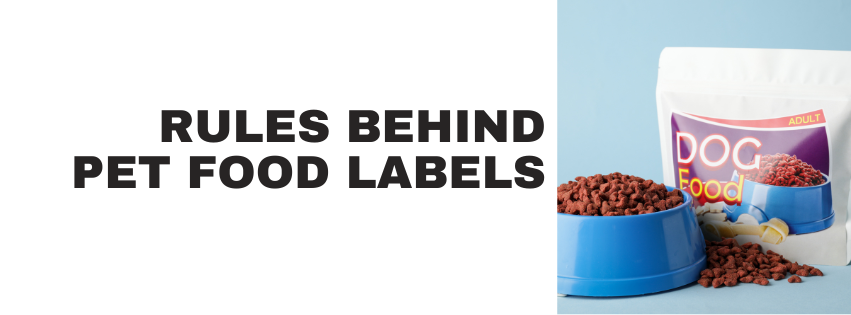
Have you ever wondered why most pet food labels look similar, regardless of the type of food? That’s because pet food label rules are strict about what can and cannot go on the label, and they do not allow manufacturers to deviate from the guidelines regardless of the type or quality of the product.
U.S. pet food labeling guidelines are published by AAFCO (Association of American Feed Control Officials). AAFCO’s guidelines define what may or may not be on the label, as well as any claims manufacturers can make on their website, social media, printed material, or signage at the retailer. These are all considered to be part of the “label”. Guidelines include:
- Ingredients: Only defined terms may be used. Regulations do not permit the use of any descriptors or quality references, such as grade, type of cut, etc. For example, the term “chicken” may be the same boneless skinless chicken breast you find in the grocery store, or it may be scraps or waste from other processing that is unfit for human consumption. Both are called “chicken” on the label.
- The are also guidelines for ingredient claims. For example, the term “made with” means the product must contain at least 20% of that ingredient in the product. So a product claiming “made with fresh chicken” might only contain 20% of fresh chicken.
- A product claiming “chicken flavored” might not have any real chicken at all.
- Font size and color: All text must conform to specifications regarding size, font, placement, description, and intent.
- Graphics: Should reflect exactly what is in the product. While this sounds straightforward, many manufacturers do include misleading graphics, such as fresh whole chickens on a bag of kibble – the extrusion process does not allow fresh whole chickens to be used, only dry powders. Another example is the use of fresh vegetables on the label when in fact they are powders or flavors, etc.
- Nutrition Guarantees: Only essential nutrients as defined by AAFCO may be included on the label, with a few being mandatory and all others being optional. A food may only be called “complete” if all essential nutrients meet the AAFCO nutrient profile. Manufacturers are not permitted to include guarantees that are not approved by AAFCO, such as “glycemic load”. Reputable manufacturers will provide this information if requested, while others don’t want you to know.
- Feeding Instructions: Daily recommended feeding. There are many factors that affect the actual ideal amount of food for a pet, such as age, breed, activity level, and metabolism, but there is only one feeding recommendation permitted on the packaging. If your dog is super active, the label won’t provide enough calories; if your pet is super inactive, he’ll gain weight based on the label recommendation. (Link to as yet to be written life stages article)
- Product Name: Even the name has to conform to specific guidelines such that it does not mispresent what is in the product or imply any claim that is not approved. For example, a product cannot be named “Low Carb Blend” since that is not an approved term.
- Other Claims: Listing specific health benefits may not be allowed on the label. Claims, such as contains antioxidants, carotenoids, and other substances proven to fight against disease, cancer, inflammation, and allergies cannot be listed on labels or websites. This primarily impacts fresh food manufacturers who incur higher costs to include fresh whole foods rich in nutrients but are not permitted to reference the health benefits.
The above is why most labels look very similar. It is up to the pet owner to look beyond the label and understand how a company is sourcing its ingredients and processing the food.
 But Is It Human Quality?