(or beef, or pork or turkey, or duck or lamb… )
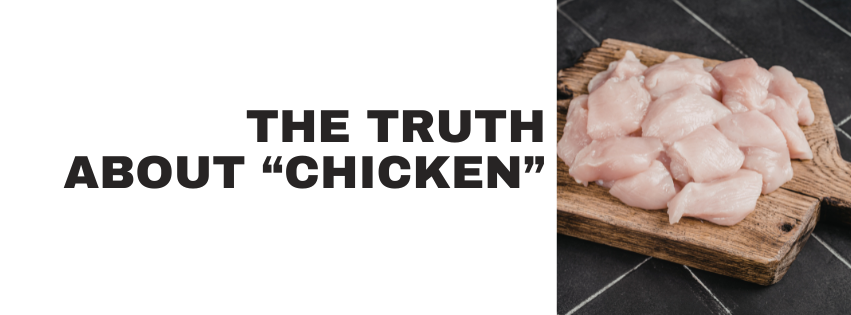
If you think “chicken” means juicy, clean, white meat—you might be surprised.
Pet food regulations do not distinguish between human-grade food and feed-grade waste (see food/feed article) and the ingredient terms cannot reflect the quality or source of the ingredient. This means:
- A company using fresh, USDA-inspected chicken breasts must label it simply as “chicken.”
- A company using scraps from diseased or dying animals also labels it as “chicken.”
The difference in quality and nutrition is enormous—but the label doesn’t tell you, because regulations only allow a company to list the word “chicken”. (If you wonder who wrote these regulations, see the article about AAFCO)
While a violation of the Food Drug and Cosmetic Act, which governs all food (for humans and animals), manufacturers consistently mislead consumers with the pictures on their packaging. Some pictures portray boneless skinless chicken breast even though a rotten, dried, or rendered chicken product constitutes the “chicken” used in the pet food product.
Sadly, there are companies who will tell you it is “fresh chicken” inside but fail to disclose that the “fresh chicken” was only fresh until it died and became scraps or diseased waste when it arrived as an ingredient. This is why it is so important to know the company behind the product.
These same regulations apply to beef, pork, turkey, and all other ingredients.
The takeaway: “Chicken” on the label tells you nothing about its quality. Know your brand. Ask hard questions. Click here to read about human grade food.
 AAFCO’s Role In Pet Food