Why Is Kibble So Popular?
Cost and convenience are the primary reasons kibble remains so popular, despite increasing knowledge of the health risks associated with a steady diet of ultra-processed ingredients.
- Kibble is made with the lowest cost ingredients, making it seem more affordable than fresh or whole food products.
- Kibble can be stored on the shelf for months to years without spoiling. It is by far the most convenient way to feed pets, requiring only that pet parents scoop the required amount into the bowl. Bulk feeders that dispense a controlled amount can even eliminate the need for the daily effort of putting food in the bowl.
What is Kibble:
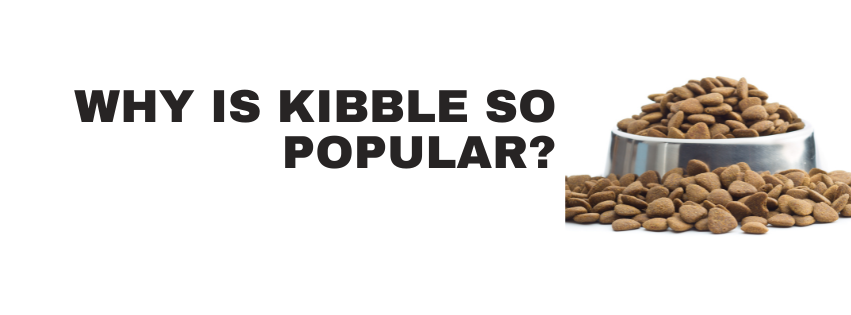
Over 60% of all pet food sales are for ultra-processed dry kibble. Ultra-processed means the food is made with highly processed ingredients and additives with little or no intact whole food, and processed using high heat, high pressure, and chemical treatments. Kibble goes through an additional processing step known as extrusion where the food paste is forced through molds at high heat and pressure to form the shaped pellets we call kibble.
While companies give the impression their ingredients include fresh food, all ingredients must be processed into powders and liquids to form the paste that is extruded into pellets. Kibble also requires added ingredients that do not contribute to the nutritional profile:
- Emulsifiers add give it the desired texture.
- Colors make it resemble the color of the food ingredients to make it look more pleasing to pet parents. For example, orange pellets are not orange because they contain more carrot, they are orange because of the coloring added. Kibble containing multi-colored pellets may appear to have a variety of ingredients, but the only real difference is the coloring added and not the ingredients or nutrients.
- Extruded pellets have little to no flavor, so flavorings are added to oils and sprayed on the pellets.
- Preservatives are added to make the kibble shelf stable which means it can be stored unrefrigerated without spoiling. Any product claiming to contain real meat must either be frozen, refrigerated, processed, or preserved, or it will spoil.
Trade-Offs:
Most kibble products contain all the essential nutrients per AAFCO Nutrient Profiles. The lower cost and convenience make it a logical choice for pet parents who haven’t considered the trade-offs between a highly-processed diet and the benefits of fresh whole food.
- Nutrients: Since the high heat of kibble production destroys many natural nutrients, synthetic supplements must be added. That’s why the ingredients list on kibble is so much longer and includes nutrients like amino acids (including taurine) that are naturally present in fresh whole foods. Many beneficial nutrients like natural enzymes, antioxidants, and other substances found in fresh whole foods are not found in kibble because they’ve been destroyed in processing.
- Health Risks: While the link between ultra-processed foods and human health issues has become more well known, the links between ultra-processed foods to health issues for our pets is still emerging. However, studies demonstrate the following:
- Obesity: Over 50% of U.S. dogs are considered obese, with high carbohydrate, ultra-processed diets being the primary cause. Most kibble is very high carb, some as high as 80%.
- Inflammation: Increased cases of inflammatory diseases, cancer, and heart disease are being linked to dry ultra-processed foods.
- Allergies: Increases in food allergies are linked to additives and highly processed ingredients. Many kibbles contain known allergens.
- Cancer Risk: Higher cancer rates in dogs are being linked to ultra-processed diets. Some products contain known carcinogens.
- Heavy Metals: Kibble products have been found to contain the highest levels of heavy metals and other contaminants known to contribute to health issues. [See “Heavy Metals” and “Other Contaminants”]
Summary:
Kibble is the lowest cost and most convenient way to feed your pets. But it does come with known health risks. Not every budget allows a 100% fresh whole food diet, but even substituting 10% of your pets diet to fresh food decreases the risk of long-term health issues by 10%.
 Why Is Fresh Food Getting More Popular?